Is AI essential for your MVP in 2025? Learn when to build with AI and when to hold off — with real-world tips, frameworks, and examples.
Why Founders Are Rushing Into AI
In a world of investor FOMO and tech hype cycles, it’s tempting to include AI in your MVP to look modern or competitive. With GPT models, recommendation engines, and automation tools becoming accessible, founders feel pressure to integrate AI features early.
But MVPs aren’t about looking cool — they’re about learning fast. And sometimes, AI can slow that down.
MVPs Are for Learning, Not for Scaling
The core purpose of an MVP is to validate:
- Is there a problem?
- Will users pay to solve it?
- Can we solve it in a usable, delightful way?
Adding AI too early might:
- Increase build complexity
- Delay launch
- Reduce transparency in how your product works (black-box UX)
Instead, build a simple version of the solution first. Validate the value proposition, then automate with AI later.
When Does AI Make Sense in an MVP?
Here are signs you may want to include AI in your MVP:
- AI is the core differentiator (e.g., a recommendation engine for content discovery)
- You have access to reliable training data
- Users expect it as table stakes (e.g., AI-based chat summarization)
- You can plug in existing models/APIs without significant cost or risk
If you’re checking one or more of these, AI may belong in v1.0.
When to Wait?
Postpone AI if:
- You’re still testing the problem-solution fit
- You don’t have enough data yet
- The AI feature won’t change user behavior in v1
Example: A health tracking app doesn’t need predictive analytics on day one. Let users log symptoms first.
Startups That Grew Without AI First
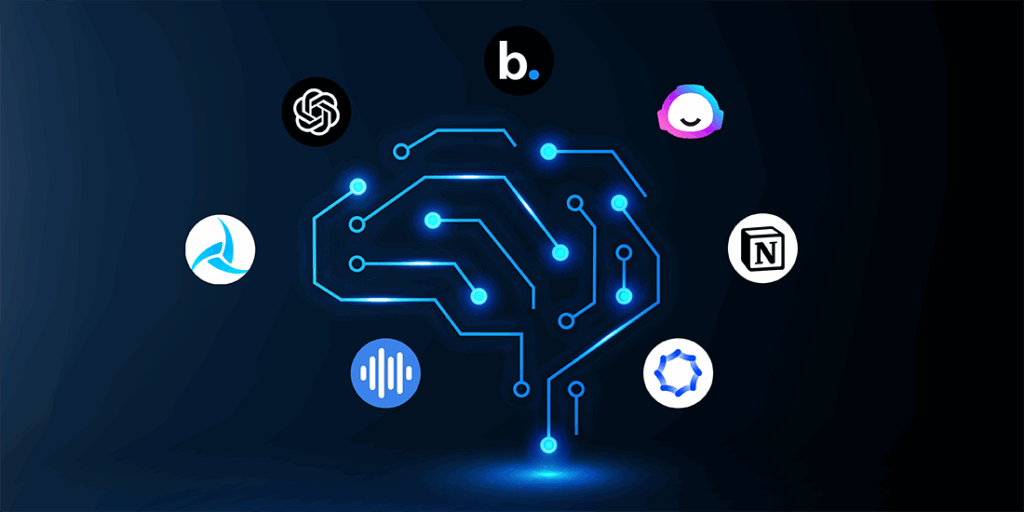
- Slack: Started with chat basics, focused on UX. AI came years later.
- Calendly: Gained traction with smart scheduling; AI features like auto-rescheduling came later.
- Notion: Launched without AI — even in 2023, AI was added as an enhancement, not a core feature.
Startups That Went AI-First (and succeeded)
- Jasper.ai: AI was the core — built around GPT from day one.
- Copy.ai: MVP was essentially GPT with UX; they scaled by layering use cases.
- Otter.ai: AI transcription was core functionality, but UX and accuracy still led adoption.
The Lean Way to Add AI to Your MVP
- Fake it first: Use no-code or human-assisted workflows to simulate AI
- Start with APIs: Leverage GPT, Google Cloud AI, etc.
- Layer it in stages: Start with rule-based automation → plug-in AI model → custom AI later
- Test impact early: Is this improving experience, or just sounding smart?
A Simple Decision Framework
Ask yourself:
- Does AI solve a problem for my users?
- Can I launch without it and still get early validation?
- Will adding AI now delay me by more than 1–2 weeks?
If the answer is YES to the first two, and NO to the last one — go for it.
AI is a Tool, Not a Requirement
AI is exciting. But don’t build a jet engine when you need a bicycle.
Remember: the best MVPs are focused, fast, and fearless — and AI should only be part of that if it truly serves your users and your core promise.
Still unsure how to scope your MVP with or without AI?
Let’s talk — we help startups build smarter MVPs that grow with real-world traction.