Walk into any office on a regular workday, and you will notice a common pattern. Employees juggling spreadsheets, replying to endless emails, manually updating reports, following up for approvals, and re-entering the same data into multiple systems. On the surface, it looks like “normal office work.” But underneath, this manual way of working quietly creates stress, inefficiency, and burnout.
Most people don’t realize that office stress is not always caused by workload alone. It is often caused by how the work is done. Repetitive tasks, manual tracking, and constant human intervention slowly drain productivity and motivation. This is where automation, powered by modern technology, changes everything.
Let’s understand this problem from a day-to-day office life perspective.
The Daily Reality of Manual Office Work
Imagine a typical employee’s day.
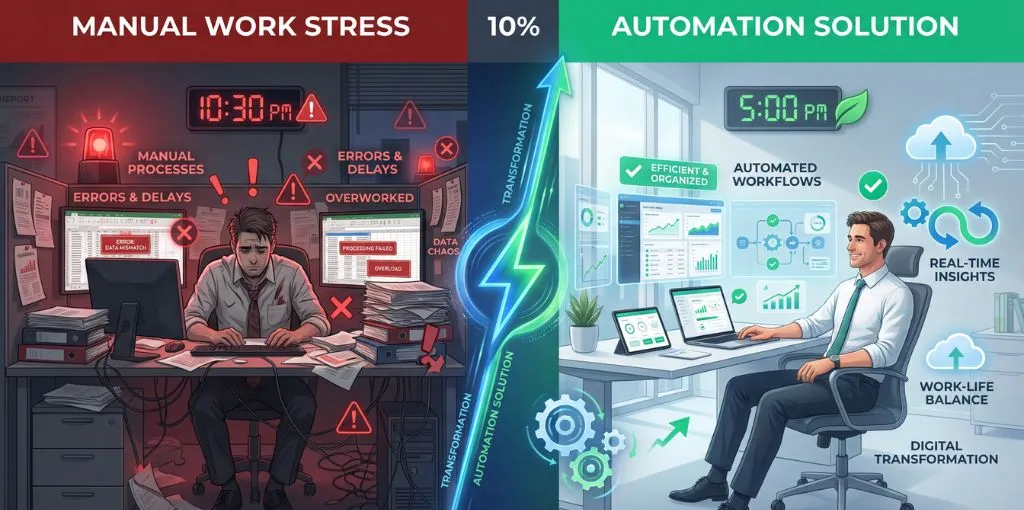
The morning starts with checking emails and updating yesterday’s work in Excel sheets. Then comes entering client details into one system, copying the same data into another tool, and manually preparing reports for managers. Throughout the day, approvals are stuck because someone missed an email. Follow-ups are forgotten. Deadlines feel closer than they actually are.
By the end of the day, the employee feels exhausted — not because the work was difficult, but because it was repetitive and disorganized.
Manual office work creates stress in many subtle ways:
-
Fear of making mistakes while entering data
-
Pressure of meeting deadlines with outdated processes
-
Constant interruptions for updates and approvals
-
Lack of clarity about task status
-
Dependence on people instead of systems
Over time, this stress impacts productivity, team morale, and even employee retention.
How Manual Processes Lead to Errors and Frustration
Humans are not designed to repeat the same task hundreds of times a day without errors. Manual work increases the chances of:
-
Wrong data entry
-
Missed emails or follow-ups
-
Lost files or outdated documents
-
Incorrect reports
Even a small mistake can lead to bigger problems — unhappy clients, financial loss, or internal conflicts. Employees then spend additional time fixing errors instead of focusing on meaningful work. This cycle adds mental pressure and frustration.
Automation solves this problem by reducing dependency on memory and manual effort.
What Automation Really Means
When people hear the word “automation,” they often imagine complex machines or expensive systems. In reality, automation in offices is much simpler and more practical.
Automation means:
-
Tasks happen automatically based on rules
-
Systems talk to each other without manual input
-
Reminders, approvals, and updates happen on time
-
Data is stored, processed, and analyzed automatically
From attendance tracking to invoice generation, automation quietly handles routine tasks in the background, allowing people to focus on decision-making and creativity.
This is why modern businesses are increasingly working with ai automation companies to redesign how everyday office work happens.
How Automation Reduces Office Stress Instantly
1. Fewer Repetitive Tasks
Automation removes repetitive data entry, reporting, and follow-ups. Employees no longer feel stuck doing the same work every day.
2. Clear Workflows
Automated systems define clear steps for tasks, approvals, and responsibilities. Everyone knows what to do and when to do it.
3. Fewer Errors
When systems handle data automatically, errors drop significantly. This builds confidence and reduces stress.
4. Better Time Management
Automated reminders, scheduling, and notifications ensure nothing is forgotten or delayed.
5. Improved Work-Life Balance
When work processes are smoother, employees finish tasks on time and feel less mentally exhausted.
Real-Life Office Automation Examples
Let’s look at some practical, everyday examples:
-
HR teams using automated attendance, leave management, and payroll systems instead of spreadsheets
-
Sales teams using CRM apps that automatically track leads and follow-ups
-
Finance teams generating invoices and expense reports automatically
-
Managers accessing real-time dashboards instead of requesting daily reports
All of these solutions reduce stress and improve efficiency without changing the nature of the job — only the way it is done.
The Role of AI in Office Automation
Artificial Intelligence takes automation a step further. Instead of just following rules, AI systems can learn patterns and make suggestions.
For example:
-
Predicting project delays
-
Identifying repetitive inefficiencies
-
Suggesting better workflows
-
Automatically prioritizing tasks
This is why businesses today look beyond basic tools and partner with experienced ai automation companies that understand real operational challenges.
How MVPnBeyond Helps Businesses Automate Smartly
At MVPnBeyond, automation is not about replacing people — it’s about making work easier and smarter.
By offering tailored digital solutions, MVPnBeyond helps businesses:
-
Identify manual bottlenecks
-
Design user-friendly automated workflows
-
Build scalable apps that grow with the business
-
Reduce operational stress and cost
Their focus on custom software development solutions ensures that automation fits naturally into existing office processes instead of forcing teams to adapt to rigid systems.
Automation Is Not Just for Big Companies
A common misconception is that automation is only for large enterprises. In reality, small and mid-sized businesses benefit even more because they operate with limited resources.
Automation helps them:
-
Save time
-
Reduce dependency on manpower
-
Improve accuracy
-
Compete with larger organizations
With the right technology partner, even simple office tasks can be transformed into efficient digital workflows.
The Bigger Impact: Happier Teams, Better Results
When manual work is reduced:
-
Employees feel more confident
-
Teams collaborate better
-
Managers get clear insights
-
Businesses grow sustainably
Automation creates a healthier work environment where stress is replaced with structure and clarity.
Final Thoughts
Manual office work may feel familiar, but it silently creates stress, inefficiency, and errors. Automation is no longer a luxury — it is a necessity for modern workplaces.
By adopting smart digital systems and working with the right ai automation companies, businesses can transform daily office life into a smoother, more productive experience.
The goal is simple: let technology handle the routine, so people can focus on what truly matters.
Read More : Ready to Launch? Why MVPnBeyond Should Be Your First Choice for Mobile App Success